One of the rites of passage of third grade is learning the basic math facts for multiplication and division. Depending on your child, the thought of this may create excitement or inspire fear.
First,
In order to dispel any possible fear, I want to explain a little bit about the relative importance (or unimportance) of math facts.
1 - Everyone can learn their math facts.
2 - Some kids will learn them more quickly than others, BUT
3 - Faster isn't necessarily better, BECAUSE
4 - Understanding how numbers work is the real goal.
Studies repeatedly show that the best math students are not necessarily the fastest at doing math problems, but the students who have number sense. They understand how math "works", they know about patterns in math, and they know that there are multiple ways to solve a problem. Developing number sense will serve your child much better than just memorizing math facts.
We spend weeks on multiplication so that students can develop an understanding of what they are doing when they multiply. It's not just magic answers pulled from their rote memorization, it's working with numbers.
However,
It is faster to multiply if students know their math facts, and learning the facts is a stated requirement for third grade. The good news is that there are easier ways than others to learn the multiplication facts.
If you follow six simple steps, you can help your child with a strategy for learning the multiplication tables that should demystify the experience and demonstrate that instead of 100 facts to learn, there are really only 7 difficult facts to learn.
1. Learn to count to 10 (done) and by 2 and 5 (probably done).
You are down to 36 facts.
2. Learn to count by 3.
You are down to 25 facts.
3. Master a 9s Trick.
You are down to 16 Facts.
4. Realize that 6 facts are the same (ie: 6x4=24, 4x6=24).
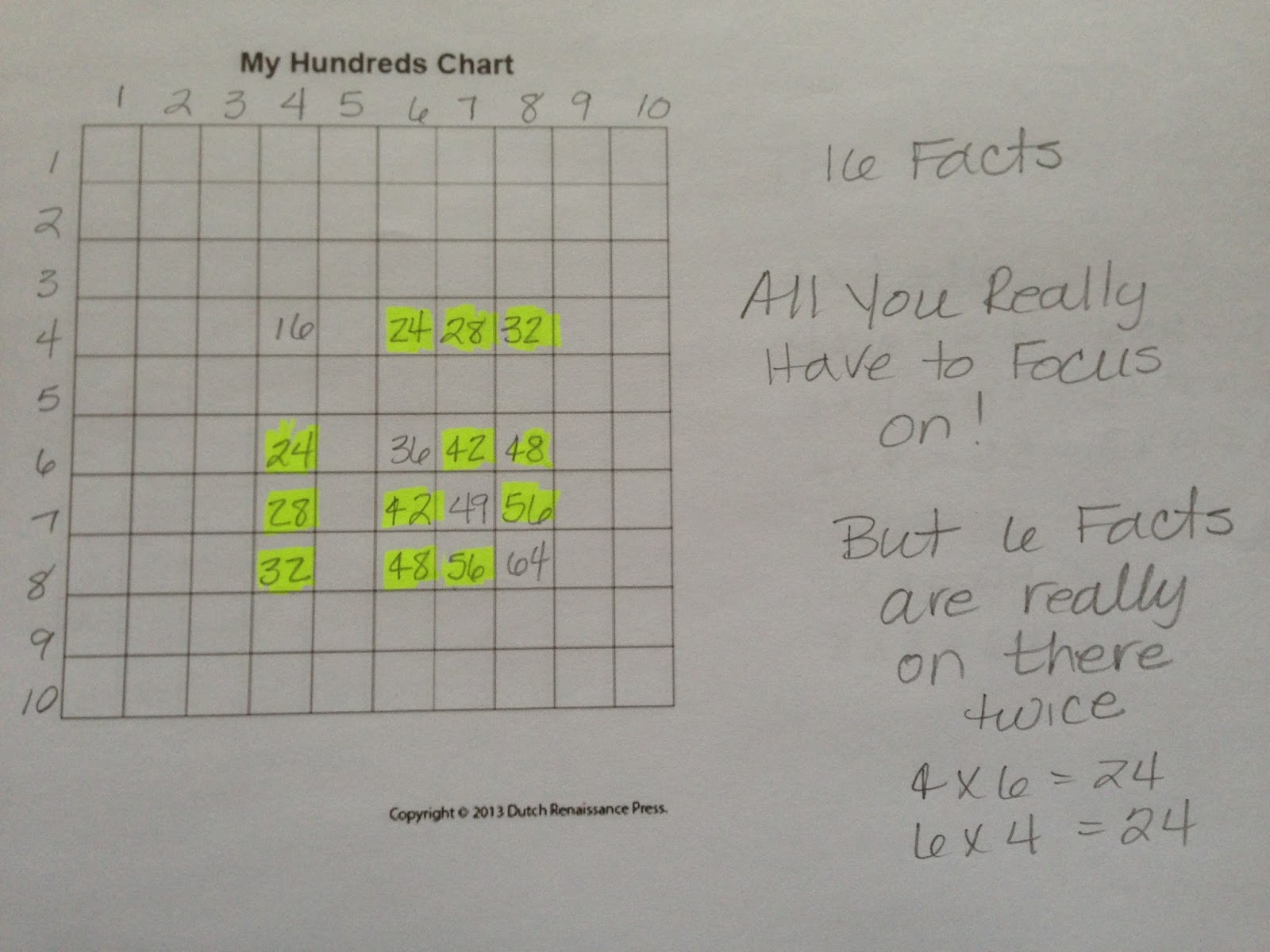
You are down to 7 "toughies".
5. Have fun and games learning these 7.
6. You are a multiplication facts wizard!
This is our site where we will share what we are learning in our fabulous third grade classroom.
Friday, June 5, 2015
Wednesday, June 3, 2015
Kahoot!
Thanks to @swampfrogkids I just learned about Kahoot! I saw it on her blog, and decided to check it out with my morning cup of tea.
I decided to create a Getting to Know You survey that I will use on the first day of school. I picked 9 questions, typed them in, added 2 - 4 possible answers for each, dropped in some free clipart and my survey was done in less than 15 minutes.
Then, to see how it really works, my daughter and I logged in to Kahoot.it on our phones. We typed in the game pin and took the survey. It was easy, it was fun, and the most impressive feature was that I was able to print out a report that showed our individual answers to the survey.
This looks like a great way to get quick, individual answers to surveys or beginning of the year assessments. I'm looking forward to using Kahoot!
Sunday, March 29, 2015
Popplet app
One of our favorite apps to use is Popplet. This app allows students to create mindmaps of linked boxes or "popples". Here they are using it for a vocabulary lesson. There are popples for the vocabulary word, the definition of the word, a sentence using the word and a drawing that shows they know what the word means.
More about electrical circuits - Squishy Circuits
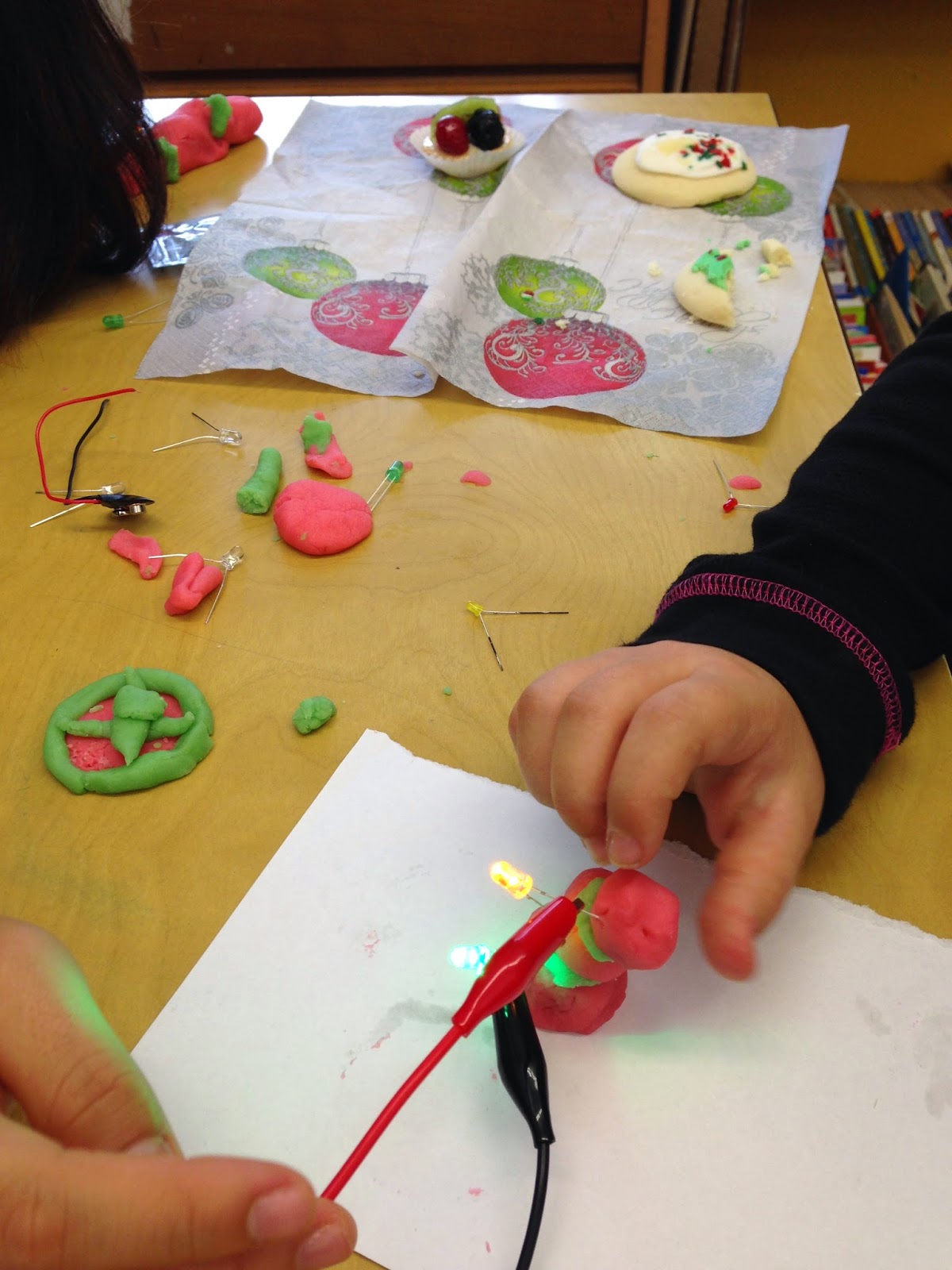
Our holiday cards were so much fun that Katie came in to teach the class more about electrical circuits. We used squishy dough to make holiday creations that lit up.
Here are some photos so you can share in the fun.
Holiday Postcard Exchange
This holiday season, our class participated in a really fun project organized by Projects by Jen. We made holiday cards for more than 20 schools and received cards back in return. It was a fun way to find out more about the 50 states. We also got one card from Canada. I am thinking of extending this project next year and organizing some Mystery Skype sessions after we have made our card map.
Maybe the most fun was making our own cards though. We learned about how electrical circuits work, then made cards with circuit stickers in them so we could make little LED lights light up. I think these cards were very festive!
Subscribe to:
Posts (Atom)